
The expansion of Japanese companies in Indonesia has continued to show positive growth in recent years. Post-pandemic, nearly half of Japanese companies have expressed interest in expanding their business operations, particularly in sectors such as manufacturing, tourism, human resource development, and circular economy initiatives. Indonesia is seen as a strategic market due to its stable middle-class growth, demographic bonus, and strong domestic consumption potential.
The presence of companies such as Marubeni, Dai Nippon Printing, and XYMAX demonstrates how Japanese investment is not limited to manufacturing, but also extends into infrastructure, property, and business services. On the other hand, automotive and electronics brands such as Toyota, Mitsubishi Motors, Honda, and Panasonic have long strengthened the Japanese industrial ecosystem in Indonesia.
This growth has created an increasing demand for professionals who can bridge business communication between Indonesia and Japan, particularly those who not only understand the Japanese language but also the professional and cultural context behind it.
In this context, the role of a Japanese Interpreter has become increasingly crucial as a communication bridge between Japanese expatriates and local Indonesian teams. A Japanese interpreter is not merely someone who speaks Japanese. They act as a strategic connector who ensures cross-cultural business communication runs accurately, effectively, and without misinterpretation.
What Is a Japanese Interpreter?
A Japanese interpreter is a professional who facilitates communication between Japanese speakers and Indonesian (or English) speakers, both verbally and in written form. This role goes beyond simply translating conversations. A Japanese interpreter ensures that messages are delivered accurately while considering cultural and business context.
In practice, a Japanese interpreter often also works as a translator for written materials such as business correspondence, reports, and official documents. They typically work in real-time situations, including business meetings, contract negotiations, technical discussions in factories, employee training sessions, audits, client visits, and management presentations.
This role requires high concentration, strong contextual understanding of the industry, and the ability to deliver messages accurately without altering the intended meaning.
In Japanese companies—especially in manufacturing and engineering sectors—even small interpretation errors can lead to production mistakes, project delays, or financial losses. Therefore, the role of a Japanese interpreter carries significant responsibility within the organization.
Why Are Japanese Interpreters Increasingly Needed in Indonesia?
As Japanese investment in Indonesia continues to grow, the demand for professional Japanese interpreters has also increased significantly.
Several key factors contribute to this rising demand:
- The Presence of Japanese Expatriates in Indonesia
Japanese companies often assign managers or engineers from their headquarters in Japan to supervise operations in Indonesia. These expatriates rely on Japanese interpreters to ensure effective communication with local teams and stakeholders.
- Industry Complexity
In industries such as manufacturing and technology, technical terminology requires precise interpretation. It is not enough to simply “speak Japanese” — interpreters must understand industry-specific terms and operational processes to avoid miscommunication.
For these reasons, Japanese interpreters are often regarded as strategic communication bridges within Japanese companies operating in Indonesia.
Duties and Responsibilities of a Japanese Interpreter
In general, the responsibilities of a Japanese interpreter include:
- Performing simultaneous or consecutive interpretation during meetings
- Accompanying Japanese expatriates in daily operational activities
- Interpreting technical discussions on production floors or project sites
- Facilitating communication between Japanese management and local employees
- Assisting with interpretation during vendor or partner negotiations
- In some cases, supporting internal document translation when necessary
In manufacturing environments, interpreters are often present directly on the production floor to ensure that technical instructions are clearly understood and properly executed.
Requirements for Japanese Interpreters in Indonesia
In the recruitment process for a Japanese interpreter in Indonesia, companies typically evaluate several important aspects:
- JLPT Certification
The Japanese-Language Proficiency Test (JLPT) is widely used as a standard measurement of Japanese language ability.
- N1 (Highest Level): Able to understand complex contexts, technical terminology, and advanced business language.
- N2: Generally the minimum requirement for professional Japanese interpreter positions.
- N3: Usually suitable for junior or support roles.
Most Japanese interpreter job openings in Indonesia require at least JLPT N2, especially in manufacturing companies and large-scale Japanese corporations.
- Real-Time Interpretation Skills
Interpretation skills are different from conversational language skills. Companies typically assess:
- Speed of comprehension
- Accuracy in delivering messages
- Ability to work under pressure
- Consistency in interpreting technical terminology
- Understanding of Japanese Business Culture and Ethics
Candidates who have studied or worked in Japan often develop a deeper understanding of Japanese work ethics and corporate culture. Direct exposure to the Japanese professional environment can help them better understand organizational hierarchy, formal communication styles, and workplace dynamics that are characteristic of Japanese companies.
This cultural understanding is often considered a valuable asset during the recruitment process, as interpreters are expected not only to translate words but also to maintain context, tone, and cross-cultural alignment in communication.
Japanese Interpreter Salary in Indonesia
Estimated salaries based on multiple reliable sources and market benchmarks:
- Junior (0–2 years): IDR 6,000,000 – 9,000,000/month
- Mid-Level (3–5 years): IDR 9,000,000 – 15,500,000/month
- Senior (6–9 years): IDR 14,000,000 – 22,000,000/month
- Lead / Specialist (10+ years): IDR 22,000,000 – 30,000,000+/month
Salaries vary depending on industry (manufacturing, automotive, consulting, trading), operational complexity, JLPT certification level (N2 vs N1), and company scale (local company, joint venture, or multinational Japanese corporation).
Challenges in Hiring Japanese Interpreters
Although the demand for Japanese interpreters in Indonesia continues to grow, the recruitment process is not always straightforward. Some common challenges include:
- Limited Talent Pool for N2–N1 Level
The number of candidates who hold JLPT N2 or N1 certification and also possess relevant industry experience remains limited in Indonesia.
- Not All Japanese Speakers Can Become Professional Interpreters
Having strong Japanese language skills does not automatically mean a candidate can perform accurate real-time interpretation in professional settings.
- Competition Among Companies
Experienced Japanese interpreters often receive multiple job offers at the same time. A slow recruitment process increases the risk of losing top candidates to competitors.
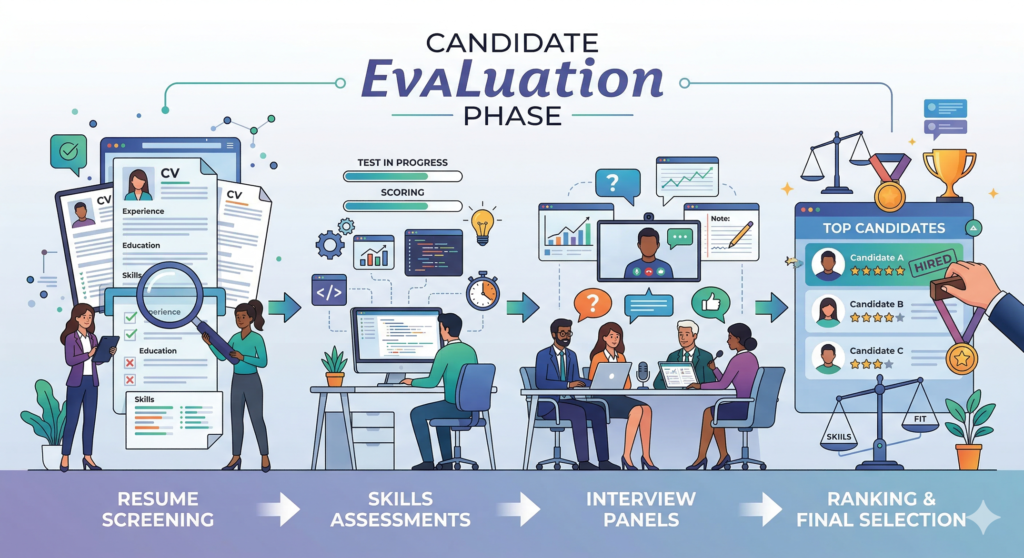
Therefore, companies need an effective and efficient recruitment strategy to secure qualified Japanese interpreters who are ready to contribute immediately.
Hire Professional Japanese Interpreters with Geekhunter
Geekhunter helps companies find professional Japanese interpreters who have gone through comprehensive screening processes, both in terms of language proficiency and professional competency.
With a quality-driven recruitment approach, Geekhunter enables companies to hire Japanese interpreters more quickly, accurately, and in alignment with business needs. Do not let cross-cultural communication challenges slow down your business expansion in Indonesia.
Looking to Hire or Find Japanese Interpreter Job Vacancies?
Hire professional Japanese interpreters in Indonesia for your business needs:
👉 https://geekhunter.co/recruitnow
Find the latest Japanese interpreter job vacancies across various industries:
👉 https://jobs.geekhunter.co