
What Is Blockchain?
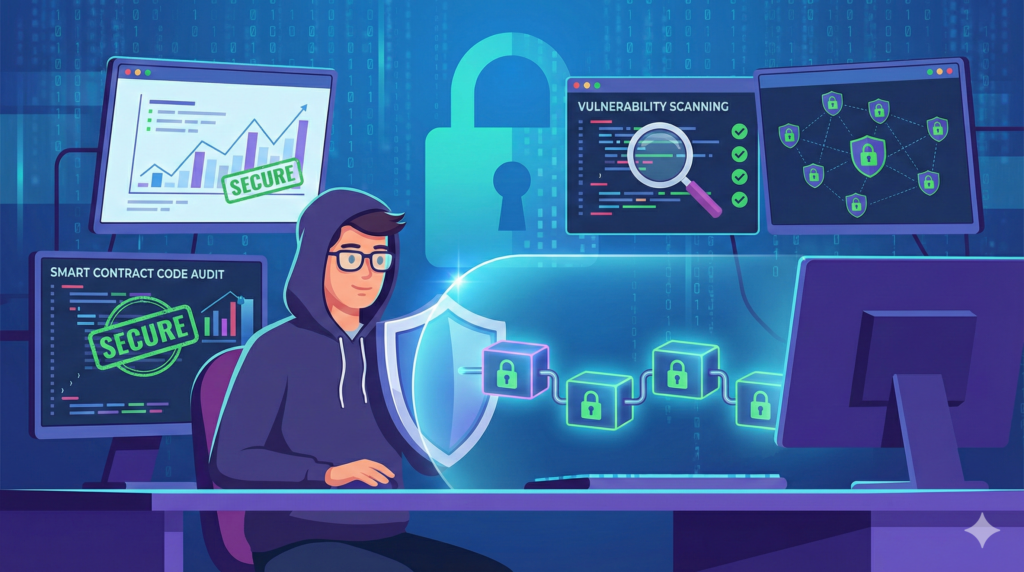
Blockchain is a decentralized and distributed data storage technology. Instead of storing data on a single central server, information is shared across multiple connected computers, known as nodes.
Unlike traditional databases that store data in tables and are managed by a single authority, blockchain stores data in blocks. Each block contains a set of records and is linked to the previous block using cryptographic technology. Once a block reaches its capacity, it is locked and can no longer be altered.
Because blockchain is transparent and highly resistant to manipulation, it is widely used to store sensitive data such as financial transactions, digital assets, and record-keeping systems across various industries.
As blockchain adoption grows in finance, logistics, healthcare, Web3, and decentralized finance (DeFi), the demand for Blockchain Developers continues to rise.
In Indonesia, blockchain adoption is no longer limited to crypto startups. Banks, fintech companies, logistics firms, and even government-related projects are increasingly exploring blockchain for transparency, security, and automation—driving strong demand for skilled Blockchain Developers.
Who Is a Blockchain Developer?
A Blockchain Developer is a software developer who specializes in building and maintaining blockchain-based systems and applications. Their role goes beyond writing code—they also ensure that blockchain systems are secure, efficient, and aligned with business needs.
In general, Blockchain Developers fall into two main roles:
- Core Blockchain Developer
Core Blockchain Developers work on the foundational layer of blockchain systems. This role is highly technical and includes:
- Designing blockchain architecture and protocols
- Developing network security mechanisms
- Managing and maintaining blockchain networks
- Blockchain Software Developer
Blockchain Software Developers focus on building applications on top of existing blockchain platforms. Their responsibilities include:
- Developing blockchain-based applications (DApps)
- Writing and maintaining smart contracts
- Integrating blockchain with web or mobile applications
In many companies, Blockchain Developers play a critical role in translating complex blockchain technology into real business value, such as cost efficiency, trustless transactions, and system transparency.
Types of Blockchain Architecture
In practice, blockchain systems come in several architectural models. Understanding these types helps developers and businesses choose the right solution.
- Public Blockchain
Public blockchains are open and permissionless. Anyone can join, participate, and view the data. The most well-known example is Bitcoin.
- Private Blockchain
Private blockchains are controlled by a single organization and accessible only to authorized participants. They are commonly used for internal enterprise solutions, such as Hyperledger Fabric.
- Consortium Blockchain
Consortium blockchains are managed by multiple organizations working together. This model is often used for inter-company collaboration, such as in logistics or supply chain management.
- Hybrid Blockchain
Hybrid blockchains combine elements of both public and private blockchains. Some data remains private, while other information is publicly verifiable. Ripple is a well-known example.
Skills Required to Become a Blockchain Developer
Hard Skills for Blockchain Developers
- Coding & Programming
Writing code is the core skill of any blockchain developer. It is used to build smart contracts, backend systems, and integrations between applications and blockchain networks. - Blockchain Programming Languages
Commonly used languages include: Solidity, Python, JavaScript - Cryptography
Cryptography secures blockchain data and transactions. Developers need to understand basic concepts such as hashing, public keys, and private keys. - Smart Contract Development
Smart contracts are self-executing programs stored on the blockchain. They enable automated transactions and agreements without intermediaries. - Data Structures
Data structures like Merkle Trees allow blockchains to store and verify data efficiently. - Blockchain Architecture
Understanding different blockchain architectures helps developers design solutions that fit specific business requirements. - Ethereum Virtual Machine (EVM)
The EVM is the environment where Ethereum smart contracts run. Knowledge of EVM helps optimize performance and transaction costs (gas fees). - Consensus Algorithms
Consensus mechanisms are used to validate transactions and maintain trust across the network. - Peer-to-Peer (P2P) Networking
Blockchain operates on P2P networks without a central server. Developers need to understand how nodes communicate with each other. - Web3 & DeFi
Knowledge of Web3 and decentralized finance enables developers to build blockchain applications aligned with current industry trends.
Soft Skills for Blockchain Developers
- Problem Solving & Critical Thinking
Blockchain developers regularly face complex technical challenges that require strong analytical skills. - Team Collaboration
Blockchain projects involve cross-functional teams, including developers, product managers, legal teams, and business stakeholders. - Adaptability & Continuous Learning
Blockchain technology evolves rapidly, making continuous learning essential. - Effective Communication
The ability to explain complex technical concepts in simple terms is crucial, especially when working with non-technical stakeholders. - Attention to Detail
Small errors in smart contracts can lead to serious security issues, so precision is critical. - Time Management
Blockchain developers often handle multiple tasks, from development to testing and deployment. - Leadership & Mentorship
At senior levels, leading teams and mentoring junior developers becomes a valuable skill.
Common Tools Used by Blockchain Developers
- IDEs & Code Editors
- Remix IDE: Browser-based tool for writing and testing Ethereum smart contracts
- Visual Studio Code: Flexible code editor with extensive blockchain extensions
- Truffle Suite: Development and testing framework for EVM-based applications
- Blockchain Networks & Testing
- Ganache: Local blockchain for testing and simulation
- Hyperledger Fabric: Enterprise-grade blockchain framework
- Corda: Distributed ledger platform for the financial industry
- Smart Contract Development Language
- Solidity: Smart contract programming language
- Smart Contract Security
- OpenZeppelin: Secure and reusable smart contract libraries
- MythX: Tool for detecting smart contract vulnerabilities
- APIs & Middleware
- Web3.js: JavaScript library for interacting with blockchain networks
- Infura: Blockchain infrastructure access without running a node
- Chainlink: Decentralized oracle for connecting smart contracts to external data
- Version Control & Collaboration
- Git, GitHub, and GitLab for code management and team collaboration
What Companies in Indonesia Actually Look For
- Ability to work with existing systems (not greenfield only)
- Experience with audits or security reviews
- Communication skills for non-technical stakeholders
- Familiarity with gas optimization and cost awareness
Blockchain Developer Salary in Indonesia
Based on adjusted data from multiple sources, here are estimated Blockchain Developer salaries in Indonesia:
- Junior Blockchain Developer (0–2 years): IDR 25M – 35M per month
- Mid-Level Blockchain Developer (3–5 years): IDR 35M – 50M per month
- Senior Blockchain Developer (6+ years): IDR 50M – 75M per month
- Managerial / Lead Blockchain Engineer: IDR 75M – 100M per month
Blockchain Developer salaries in Indonesia are generally higher than traditional software roles due to limited talent supply, high system risk, and strong demand from global and remote-first companies.
Hire Top Blockchain Developers with Geekhunter
Whether you’re building a Web3 product, an enterprise blockchain system, or scaling your engineering team, Geekhunter connects you with Blockchain Developers who are technically strong and business-ready.
👉 Hire a Blockchain Developer now:
https://geekhunter.co/recruitnow
👉 Explore the latest Blockchain Developer jobs vacancy in Indonesia:
https://jobs.geekhunter.co/