
Will AI replace IT jobs or create new ones? Explore the truth about AI in tech careers and how IT talent can stay ahead in the future of work.
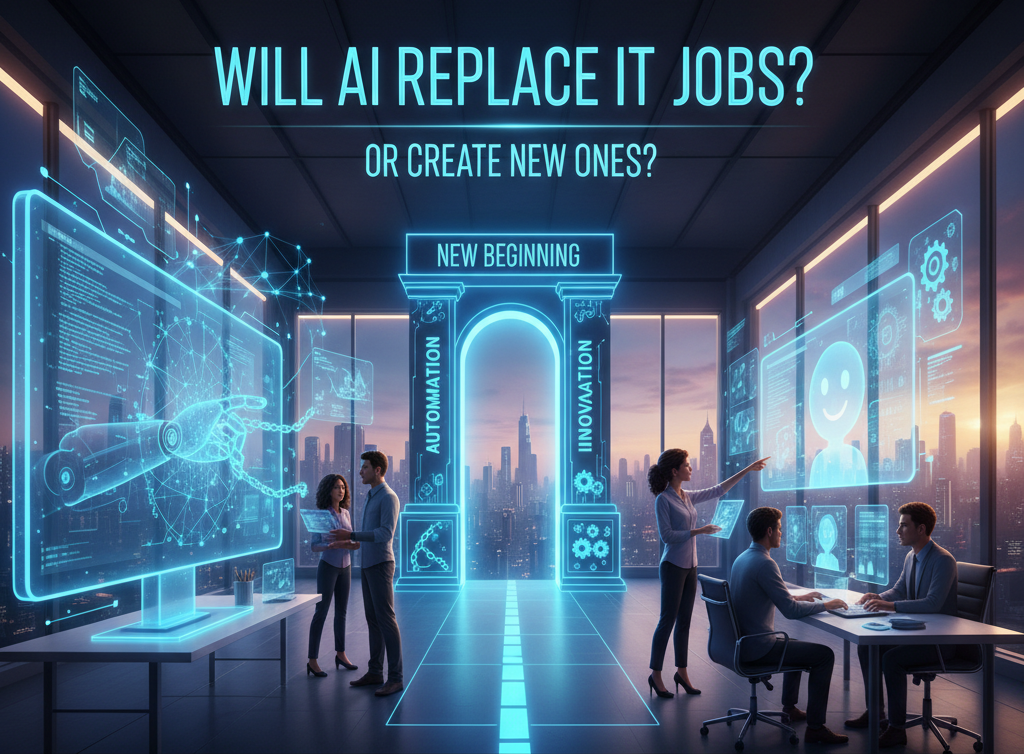
How AI develop in this digital era
AI is no longer just something we see in sci-fi movies—it’s already part of our daily work. From tools like ChatGPT to different automation software, AI is changing how people in IT code, collaborate, and solve problems. For some, this feels exciting because it makes work faster and easier, but for others, it raises concerns about whether AI might actually replace human jobs. So the big question for us in IT is:
—how should we respond to these changes?
The fear of job displacement isn’t without merit. According to the World Economic Forum’s Future of Jobs Report (2025), nearly 92 million roles could be automated by 2030, particularly those involving repetitive and rule-based tasks. In IT, this often means entry-level positions, where responsibilities like bug fixing, basic coding, or routine testing are vulnerable to automation.
A Stanford study (2024) also found that early-career professionals in AI-exposed roles have already experienced a decline in employment, with young developers and support engineers among the most impacted. Customer support, data entry, and basic administrative IT functions are also at high risk, since generative AI can handle many of these workflows faster and at lower cost.
In short, jobs that rely heavily on predictable, repetitive work face the greatest threat. But that doesn’t mean the end of IT careers—far from it.
How to wisely utilize AI in some roles
Instead of fearing AI, the smarter approach is to treat it as a partner, not a competitor. Studies from Northwestern University (2025) highlight that AI, when used alongside human expertise, enhances productivity rather than replacing it. For developers, tools like GitHub Copilot can speed up code writing and debugging, freeing up time for more strategic, creative tasks.
The key is to focus on skills AI can’t easily replicate—such as problem-solving, collaboration, system design, and business communication. Employers are increasingly valuing “AI literacy,” meaning professionals who not only code but also know how to integrate AI into solutions. New career opportunities are already emerging: roles like AI Engineer, Machine Learning Engineer, Data Scientist, and AI QA Engineer are growing across industries.
For IT professionals, the path forward is clear:
- Upskill with AI tools and cloud technologies.
- Build hybrid skills that combine technical expertise with strategic thinking.
- Showcase AI-integrated projects on GitHub or LinkedIn to stand out.
In other words, AI is not the end of IT jobs—it’s the start of new and more valuable ones.
Want to start your journey in AI? Find this role at geekhunter
AI isn’t here to replace you, but it’s here to elevate your career. The IT professionals who will thrive in the future aren’t those who compete against AI, but new opportunities will also appear for those who adapt.
If you’re ready to explore AI-powered opportunities and future-proof your career, start your journey today with Geekhunter.
Check out jobs.geekhunter.co and find a position that fits your future in tech!