
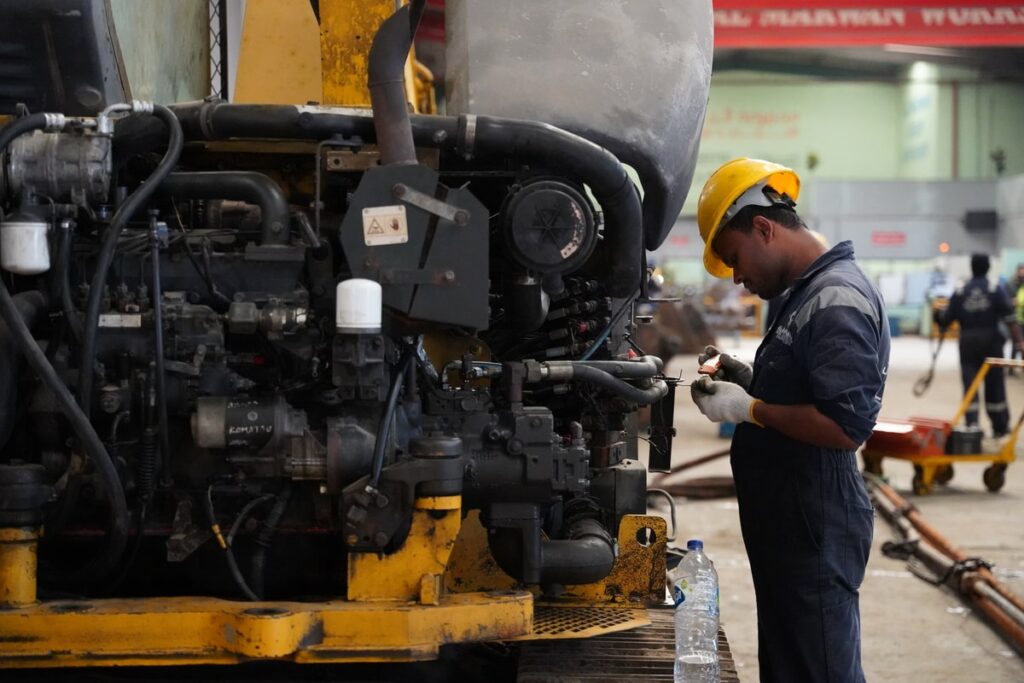
What Is a Field Service Engineer?
A Field Service Engineer (FSE) is a technical professional responsible for installing, maintaining, troubleshooting, and repairing equipment or systems directly at a client’s site. The primary responsibility of a Field Service Engineer is to ensure operational systems run efficiently while minimizing costly downtime that can disrupt business performance. Beyond technical execution, the role also positions FSEs as frontline representatives of the company in customer-facing environments.
In Indonesia and across emerging industrial markets, demand for Field Service Engineers continues to grow alongside the expansion of technology-driven sectors such as semiconductors, oil & gas, industrial automation, data centers, medical equipment, and renewable energy. The responsibilities of a Field Service Engineer often involve handling mission-critical systems under time-sensitive conditions, requiring both technical expertise and strong field readiness.
Unlike in-house engineers who operate within a single plant or facility, a career as a Field Service Engineer typically involves high mobility. Field Service Engineers frequently travel across cities or islands, work rotational schedules, and may take on offshore assignments depending on project requirements. The role also provides exposure to multinational principals and global vendors, making adaptability and cross-cultural communication essential competencies.
As industries become more complex and service expectations rise, companies are facing increasing challenges in securing qualified Field Service Engineers who combine technical depth, operational resilience, and global communication capabilities. In today’s competitive talent market, finding the right Field Service Engineer is no longer just about technical skills—it is about securing professionals who can sustain business continuity in dynamic and high-pressure environments.
Key Responsibilities of a Field Service Engineer
The responsibilities of a Field Service Engineer combine technical execution, operational accountability, and commercial support. A typical Field Service Engineer job description includes:
- Installing hardware, software, or integrated systems at client sites
- Performing system commissioning and configuration
- Troubleshooting and diagnosing technical issues efficiently
- Conducting preventive and corrective maintenance to minimize downtime
- Calibrating industrial or medical equipment according to standards
- Monitoring system performance and operational reliability
- Preparing detailed service reports and technical documentation
- Handling warranty cases and providing after-sales support
- Coordinating with Field Service Managers and internal engineering teams
- Delivering technical feedback to principals or product development teams
- Supporting service contract execution, maintenance renewals, and identifying potential upsell opportunities
As customer-facing professionals, Field Service Engineers serve as the company’s frontline representatives. Beyond technical skills, the role requires professional communication, strong technical judgment, and the ability to maintain client trust—especially when working with mission-critical systems.
Field Service Engineer Skills
Hard Skills for Field Service Engineers
The hard skills of a Field Service Engineer focus on technical capabilities required for on-site installation, maintenance, and system repair. Key Field Service Engineer skills include:
- Technical Troubleshooting and Diagnostics
Ability to analyze and identify root causes of equipment or system failures using diagnostic tools and structured methods. - Electrical and Mechanical Repair
Expertise in repairing motors, control panels, sensors, pneumatic systems, and hydraulic components. - Preventive and Predictive Maintenance
Performing routine maintenance and using monitoring systems or data analytics to anticipate potential failures before downtime occurs. - Networking and IT Systems
Understanding network configuration, servers, and IT-integrated industrial systems, especially in automation and data center environments. - Robotics and Automation Systems
Knowledge of PLC, SCADA, and HMI systems used in modern manufacturing processes. - Advanced Computer Skills
Proficiency in technical software, monitoring tools, and digital service management systems. - Reading Schematics and Technical Drawings
Ability to interpret electrical diagrams, wiring schematics, and blueprints for installation and troubleshooting. - Health and Safety Compliance
Understanding occupational safety standards to ensure safe operations in industrial or project sites.
Soft Skills for Field Service Engineers
- Communication and Interpersonal Skills
Ability to explain technical issues clearly and build strong professional relationships. - Problem-Solving and Critical Thinking
Quickly analyzing field situations and finding effective solutions, even in urgent conditions. - Customer Service Orientation
A service mindset, as FSEs represent the company during on-site technical operations. - Adaptability and Flexibility
Willingness to work in various locations and adapt to changing schedules or unexpected conditions. - Time Management and Prioritization
Ability to manage multiple service calls efficiently. - Teamwork and Collaboration
Working closely with technical teams and field managers to complete projects successfully. - Stress Management and Resilience
Remaining calm under pressure, especially during system downtime situations. - Attention to Detail and Precision
Ensuring installations and repairs are done accurately to prevent further issues. - Emotional Intelligence and Empathy
Understanding operational challenges and responding professionally. - Continuous Learning and Self-Improvement
Keeping up with technological advancements and evolving industry standards.
These skills are essential because Field Service Engineers operate in dynamic field environments where technical precision and responsiveness are crucial.
Certifications for Field Service Engineers
Certifications significantly strengthen a Field Service Engineer’s profile and improve visibility in global recruiter searches. Common certifications for Field Service Engineers include:
- PLC Certification (Siemens or Allen-Bradley) for industrial automation roles
- K3 or OSHA Certification for workplace safety compliance
- OEM Product Certification based on specific equipment or manufacturer requirements
- CompTIA Network+ for IT-based or data center Field Service Engineers
- GWO (Global Wind Organisation) certification for renewable energy and wind turbine technicians
These certifications validate technical expertise and enhance competitiveness in both local and international job markets.
Tools Used by Field Service Engineers
In practice, Field Service Engineer tools include both hands-on technical equipment and operational software that support field execution and reporting. Below are the main categories commonly used across industries:
- Diagnostic & Testing Tools: Used to analyze and identify technical issues on-site.
- Multimeters (such as Fluke) for voltage, current, and resistance measurement
- Oscilloscopes for signal analysis and waveform diagnostics
- Thermal imaging cameras for detecting overheating components
- Portable diagnostic devices specific to industrial standards
These tools enable Field Service Engineers to perform accurate and efficient troubleshooting, particularly in mission-critical environments.
- OEM & Automation Software: Proprietary software from equipment manufacturers used for configuration and programming.
- PLC programming tools such as Siemens TIA Portal or Allen-Bradley RSLogix
- SCADA and HMI software for automation monitoring
- OEM-specific diagnostic and configuration software
Mastery of OEM software is often a key hiring requirement, especially for engineers supporting specialized equipment.
- CMMS & Field Service Management (FSM) Systems: Used to manage field operations, maintenance records, and service workflows.
- Computerized Maintenance Management Systems (CMMS)
- Field Service Management platforms for work order tracking and scheduling
- Asset management systems for preventive and predictive maintenance
These systems help Field Service Engineers maintain structured reporting, monitor service level agreements (SLAs), and ensure operational transparency.
- Documentation & Reporting Tools: Digital service reporting platforms
- Mobile inspection and checklist applications
- Technical documentation software
- Cloud-based collaboration tools for coordination with engineering teams
Because Field Service Engineers operate as client-facing representatives, accurate documentation and professional reporting are essential parts of the role.
Field Service Engineer Salary in Indonesia (2026)
Based on salary benchmarking analysis from multiple public sources and recent market hiring trends in Indonesia, the estimated Field Service Engineer salary range is as follows:
- Junior Field Service Engineer (0–3 years): IDR 5,5 million – 10 million per month
- Mid-Level Field Service Engineer (4–7 years): IDR 10 million – 18 million per month
- Senior Field Service Engineer (8+ years): IDR 18 million – 35 million+ per month
- Field Service Manager: IDR 35 million – 60 million+ per month
The Field Service Engineer salary in Indonesia varies depending on work location, industry complexity, company scale, and the candidate’s experience and certifications.
In reality, total compensation for a Field Service Engineer rarely consists of base salary alone. Many companies, especially in semiconductor, energy, oil & gas, data center, and other high-tech industries, offer additional compensation components such as:
- Site allowance for project-based assignments
- Travel allowance for intercity or offshore mobility
- Overtime or on-call allowance for emergency response support
- Offshore premium for engineers assigned to offshore projects
- Project-based incentives for contract or milestone-driven roles
In many cases, the total take-home pay of a Field Service Engineer can significantly exceed the base salary, particularly for those assigned to site-based or offshore projects, or those with specialized technical expertise.
Why Hiring Field Service Engineers in Indonesia Is Challenging
Although demand for Field Service Engineers in Indonesia continues to grow, hiring for this role presents several challenges:
- High turnover due to travel intensity, rotational schedules, and offshore assignments.
- Counteroffers from principals or competitors, especially for engineers with niche OEM or automation expertise.
- Skill mismatch, as companies often seek hybrid capabilities across mechanical, automation, and networking systems.
- Certification gaps, particularly in PLC, OSHA/K3, and OEM credentials.
- Salary expectation gaps, driven by differences between base salary and total compensation packages (allowances, overtime, offshore premiums).
As a result, hiring a Field Service Engineer requires more than technical screening—it demands alignment in mobility, compensation, and long-term retention strategy.
Hire Field Service Engineers in Indonesia with Geekhunter
Finding a highly skilled Field Service Engineer in Indonesia who is technically strong and ready to manage critical systems in the field can be challenging.
Geekhunter helps companies connect with experienced Field Service Engineers across semiconductor, manufacturing, energy, IT infrastructure, and other high-technology industries.
Looking to hire a Field Service Engineer in Indonesia?
👉 Hire now:https://geekhunter.co/recruitnow
Ready to grow your career as a Field Service Engineer?
👉 Explore the latest Field Service Engineer jobs:https://jobs.geekhunter.co/