
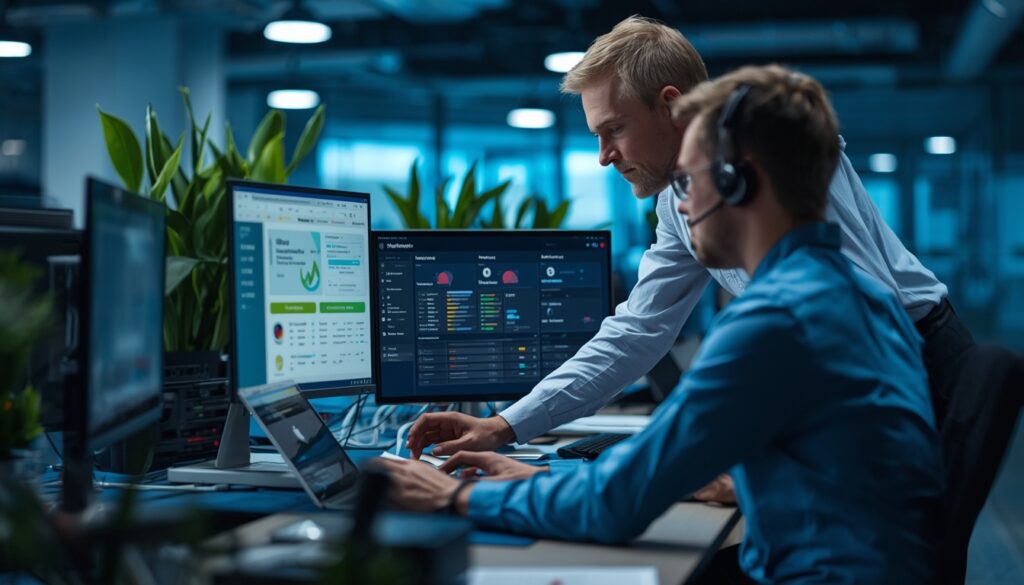
In today’s digital workplace, almost every business activity depends on technology. From accessing email and business applications to connecting to internal networks, employees rely on IT systems that work reliably so they can remain productive.
However, technical issues can happen at any time. A laptop that will not start, a locked account, network connectivity problems, or software errors can interrupt work and even affect an entire team’s operations.
This is where IT Support becomes essential. Professionals in this role help ensure that the devices, systems, and technology services employees use every day remain operational so they can work without unnecessary disruptions.
As more organizations adopt cloud computing, hybrid work, and digital transformation initiatives, the demand for professionals who can provide fast and effective technical support continues to grow.
What Is IT Support?
IT Support is an information technology role responsible for helping end users resolve technical issues related to hardware, software, networks, and business systems used in daily operations.
The position is often one of the main points of contact when employees experience technology-related problems. Beyond troubleshooting, IT Support professionals may install software, configure devices, manage user accounts, perform preventive maintenance, and guide employees in using workplace technology effectively.
In modern organizations, the role is no longer limited to fixing computers. IT Support also contributes to employee productivity, user experience, and smooth business operations by ensuring technology services remain available and reliable.
Read also: System Administrator in Indonesia: Keeping IT Infrastructure Reliable and Secure
IT Support vs Help Desk vs System Administrator
These three roles are often grouped together because they all support an organization’s technology operations. However, each has a different focus and scope of responsibility.
| Aspect | Help Desk | IT Support | System Administrator |
| Primary Focus | Receiving and managing user support requests | Resolving user-facing technical issues and keeping devices operational | Managing and maintaining IT infrastructure |
| Type of Support | First-level support and ticket management | Hardware, software, network, account, and workstation troubleshooting | Servers, networks, Active Directory, virtualization, backups, and enterprise systems |
| User Interaction | Very high | High | Relatively lower |
| Scope of Work | Basic questions, ticketing, and escalation | Installation, configuration, maintenance, troubleshooting, and user support | Core infrastructure and enterprise systems |
| Typical Issues | Password resets and basic application issues | Laptop, printer, email, VPN, and software problems | Servers, storage, Active Directory, backups, and virtual machines |
In practice, these roles complement one another. Help Desk teams often serve as the initial point of contact, IT Support professionals handle many day-to-day technical issues, while System Administrators focus more heavily on infrastructure and core systems.
Why Is IT Support Becoming More Important?
Digital transformation has made almost every business function dependent on technology. When devices or systems fail, the impact is no longer limited to the IT department. Productivity across the organization can be affected.
Several factors are driving demand for IT Support professionals:
- Cloud and SaaS Adoption: More businesses rely on cloud-based applications and Software as a Service for daily operations.
- Growth of Hybrid and Remote Work: Employees need reliable technology support regardless of where they work.
- Increasing Number of Devices: Laptops, desktops, mobile devices, printers, and other equipment need to be managed and maintained.
- Need for Faster Technical Support: Technology disruptions need to be resolved quickly to minimize business impact.
- Higher Expectations for Internal IT Services: Employees increasingly expect responsive and accessible technology support.
- Investment in Digital Workplaces: Organizations are paying greater attention to how technology affects productivity and employee experience.
These developments continue to support demand for IT Support in Indonesia across startups, enterprises, and other technology-dependent organizations.
Industries That Need IT Support
Almost every organization that relies on technology needs professionals who can keep devices, systems, and IT services running reliably.
Industries that commonly require this role include:
- Technology Companies & Startups
- Banking & Fintech
- Telecommunications
- Healthcare & Hospitals
- Manufacturing
- Retail & E-commerce
- Education
- Government & State-Owned Enterprises
- IT Consulting & Managed Service Providers
- Multinational Corporations
The need is not limited to large enterprises. Many small and medium-sized businesses are also developing internal IT capabilities as digital systems become increasingly important to their operations.
Roles and Responsibilities of an IT Support Professional
An IT Support professional is responsible for helping employees use devices, applications, networks, and technology services without unnecessary interruptions.
The responsibilities can generally be divided into daily activities and operational responsibilities.
Daily Responsibilities
- Technical Troubleshooting: Diagnose and resolve issues involving laptops, computers, printers, applications, operating systems, and network connectivity.
- Device Installation & Configuration: Install and configure computers, laptops, printers, software, and other IT equipment.
- End User Support: Provide technical assistance both on-site and remotely while ensuring issues are resolved efficiently.
- User Account Management: Create, modify, and deactivate user accounts, reset passwords, and support access management.
- Preventive Maintenance: Perform routine checks and maintenance on hardware and software to reduce potential disruptions.
- Documentation & Ticket Management: Record incidents, troubleshooting steps, resolutions, and configuration changes for future reference.
Operational Responsibilities
- IT Asset Management: Maintain records of laptops, desktops, monitors, printers, software licenses, and other IT assets.
- User Experience Improvement: Identify recurring issues and recommend improvements to make IT services more efficient and user-friendly.
- Cross-functional Collaboration: Work with System Administrators, Network Engineers, Security Engineers, and external vendors when issues require specialized support.
- Employee Onboarding & Offboarding Support: Prepare devices, accounts, applications, and access for new employees while ensuring access is properly revoked when employees leave.
- Knowledge Base & SOP Development: Create user guides, troubleshooting documentation, and standard operating procedures to improve support efficiency.
The role therefore goes beyond resolving issues after they occur. IT Support professionals can also help prevent recurring problems and improve the overall quality of internal technology services.
Skills Every IT Support Professional Should Have
Working in IT Support requires more than the ability to repair computers. Because the role interacts directly with employees, professionals need a combination of technical knowledge, problem-solving ability, communication, and customer service skills.
Hard Skills
- Hardware & Software Troubleshooting: Identify and resolve issues involving computers, laptops, printers, operating systems, and business applications.
- Operating System Administration: Understand Windows, macOS, and Linux for configuration, maintenance, and troubleshooting.
- Networking Fundamentals: Understand TCP/IP, DNS, DHCP, VPN, Wi-Fi, switching, and routing.
- Microsoft 365 & Google Workspace: Manage email, user accounts, Microsoft Teams, SharePoint, Google Workspace, and other collaboration platforms.
- Active Directory & User Management: Manage user accounts, group policies, permissions, and authentication within Windows environments.
- Basic Cloud Services: Understand platforms such as Microsoft Azure and Google Workspace Admin to support modern workplace environments.
Soft Skills
- Problem Solving: Analyze technical issues and determine effective solutions within limited timeframes.
- Communication: Explain technical solutions clearly to users with different levels of technical knowledge.
- Customer Service Mindset: Provide patient, professional, and user-focused assistance.
- Time Management: Handle multiple support requests while prioritizing issues according to urgency and business impact.
- Adaptability: Quickly learn new devices, applications, and technologies as organizations evolve.
Ultimately, professionals in this field need to combine technical expertise with a user-oriented service mindset because the quality of IT support can directly affect employee productivity.
Common Tools Used by IT Support
IT Support professionals use a wide range of tools for troubleshooting, device management, monitoring, ticketing, and remote assistance.
- Operating Systems: Windows, macOS, Linux
- Remote Support Tools: AnyDesk, TeamViewer, Microsoft Quick Assist
- IT Service Management (ITSM): Jira Service Management, ServiceNow, Freshservice, ManageEngine ServiceDesk Plus
- Endpoint Management: Microsoft Intune, Microsoft Endpoint Configuration Manager (SCCM), Jamf
- Identity & Access Management: Active Directory, Microsoft Entra ID
- Productivity Platforms: Microsoft 365, Google Workspace
- Network Diagnostic Tools: Ping, Tracert, IPConfig, Wireshark
- Monitoring Tools: PRTG Network Monitor, Zabbix, Nagios
- Ticketing Systems: Zendesk, Spiceworks, Freshdesk
- Remote Monitoring & Management (RMM): NinjaOne, ConnectWise Automate, Atera
Tool proficiency can make daily operations more efficient, but the ability to diagnose problems, understand user needs, and deliver the right solution remains essential.
IT Support Salary Outlook in Indonesia
Based on Geekhunter’s experience recruiting technology professionals across various industries, combined with market benchmarks and career platforms, the estimated monthly salary range for IT Support in Indonesia is:
- Junior IT Support (0–2 years of experience): ~IDR 5,000,000 – IDR 8,000,000 per month
- Mid-Level IT Support (2–5 years of experience): ~IDR 8,000,000 – IDR 15,000,000 per month
- Senior IT Support (5–8 years of experience): ~IDR 15,000,000 – IDR 22,000,000+ per month
- IT Support Lead / IT Support Supervisor: IDR 22,000,000+ per month
Actual compensation varies depending on industry, company size, IT environment complexity, experience, certifications, and scope of responsibility.
Professionals with experience in cloud administration, endpoint management, Microsoft 365, automation, or enterprise IT environments may have different compensation opportunities depending on employer requirements.
How to Build a Career as an IT Support Professional
IT Support is often an entry point for professionals looking to build a career in technology. The role provides hands-on experience with hardware, software, networks, systems, and end-user needs.
Common Professional Backgrounds
Professionals may enter the field through backgrounds such as:
- Information Technology graduates
- Information Systems graduates
- Help Desk
- Desktop Support
- Technical Support
- Field Support Engineer
Many professionals spend around 2–5 years in support roles before moving into a more specialized technical path, although career progression varies based on experience and individual goals.
Career Paths
With additional experience, professionals can progress into roles such as:
- System Administrator
- Network Engineer
- Cloud Engineer
- IT Infrastructure Engineer
- IT Operations Engineer
- IT Manager
What to Build
- Strong knowledge of Windows, Linux, and macOS
- Networking and troubleshooting skills
- Experience with Microsoft 365 and Active Directory
- Experience with Microsoft Intune or endpoint management platforms
- Strong communication and customer service skills
- Understanding of IT service management
- Experience handling a wide range of end-user issues
Recommended Certifications
- CompTIA A+
- CompTIA Network+
- Microsoft Certified: Modern Desktop Administrator Associate
- ITIL 4 Foundation
- Google IT Support Professional Certificate
Certifications can strengthen technical knowledge and credibility. However, hands-on experience with troubleshooting, user support, and reliable IT operations remains an important part of career development.
Career Outlook for IT Support in Indonesia
The role of IT Support in Indonesia continues to evolve as digital workplaces become more complex.
While the position traditionally focused on device and software troubleshooting, professionals are increasingly exposed to device management, cloud services, hybrid work support, endpoint security, and employee technology experience.
Advancements in Artificial Intelligence (AI), automation, and cloud computing are also changing how support teams operate. AI-powered chatbots and virtual assistants can handle routine requests such as password resets, frequently asked questions, and basic troubleshooting. Endpoint management platforms can also centralize software deployment, device configuration, and remote monitoring.
However, technology does not completely replace IT Support professionals. Complex technical issues, root cause analysis, cross-functional coordination, and personalized user assistance still require human expertise.
As companies continue investing in digital workplaces, cloud infrastructure, and modern IT operations, professionals can specialize in areas such as:
- System Administration
- Cloud Operations
- IT Infrastructure
- Endpoint Management
- IT Service Management
- IT Operations
For professionals who enjoy solving problems, helping users, and continuously learning new technologies, IT Support can provide a strong foundation for multiple career paths within the technology industry.
Why Do Companies Continue to Invest in IT Support Talent?
Technology cannot create its full business value if employees cannot use it effectively. Even seemingly small problems such as a laptop failure, locked account, or software error can reduce productivity and disrupt daily operations.
IT Support professionals help ensure employees have reliable access to the devices, systems, and technology services they need every day.
Beyond troubleshooting, they contribute to:
- Reducing downtime
- Maintaining employee productivity
- Improving employee experience
- Resolving technical issues faster
- Supporting digital workplace initiatives
- Keeping business operations running smoothly
As organizations expand their use of cloud computing, hybrid work, digital workplace solutions, and connected devices, companies need professionals who can do more than fix technical problems. They also need talent who can improve internal IT services and support a productive technology environment.
Hire Top IT Support Professionals in Indonesia with Geekhunter
Hiring the right IT Support professional requires more than finding someone who can fix computers. Companies need professionals with strong troubleshooting skills, knowledge of modern workplace technologies, and the ability to provide a positive support experience.
Geekhunter helps companies find IT Support professionals in Indonesia with the right combination of technical expertise, problem-solving ability, technology knowledge, and communication skills.
Looking for an IT Support professional for your company?
👉 Hire an IT Support professional now: https://geekhunter.co/services
Interested in building a career in IT Support?
👉 Explore the latest IT Support opportunities: https://geekhunter.co/careers